- Day 1
Flight from Perpignan to Barcelona airport via Munich
- Day 2
Welcome to Osaka Airport, panoramic tour, departure to Kyoto
- Day 3
Visit to Kyoto, the Golden Pavilion and the Kyomizu Temple
- Day 4
Start to Fushimi Inari, visit the temple, direction Nara, visit the temple of Todai-Ji and Horyyuji
- Day 5
Visit to Arashiyama, Tenryuji Temple, the Philosophy Path and Gion Quarter
- Day 6
Start to Kanazawa, visit to Kenroku-en, tea ceremony, experience of the golden sheet
- Day 7
Visit the Castle of Kanazawa, departure to Shirakawago, visit Kanda family house, stop in Gokayama
- Day 8
Takayama tour and local market, saque degustation, visit to Takayama Jinya
- Day 9
Start to Kawaguchiko, stop at the Kubota Icchiku Museum
- Day 10
Visit to the Fuji Asama sanctuary, stop at the village of Oshino Hakkai, funicular on Mount Takao
- Day 11
Start to Tokyo, visit Meiji Jingu Sanctuary, from Omote Sando, Mori Building
- Day 12
Start to Kamakura, visit the temple of Kotokuin, Kencho-ji and Hase Dera, then the sanctuary of Tsurugaoka Hachiman-gu
- Day 13
Visit to Hamarikyu Gardens, Tsukiji and Akihabara Quarter, Sensoji Temple, transfer to Tokyo Airport
- Day 14
Escale to Munich, arriving in Barcelona and then transfer to Perpignan
Find the steps, accommodations, services and conditions in the program published by the agency.
The Spirit and the Summary of the Journey · Page 2
WHEN AUTUMN TRANSFORMS JAPAN Japan is a country where futuristic skyscrapers stand alongside centuries-old temples, ancestral traditions still shape daily life, and every detail reflects a profound sense of aesthetics and harmony. From Tokyo's energy to Kyoto's preserved lanes and the spectacular landscapes of the Japanese Alps, this journey reveals the archipelago's many facets. Discover a fascinating country of Shinto shrines, Zen gardens, traditional villages, refined cuisine and cutting-edge technology. WHO IS THIS TRIP FOR? This trip is for curious travellers wishing to discover one of the world's most fascinating cultures through an itinerary balancing essential sights with more authentic encounters. It suits lovers of culture, history and tradition as well as those drawn to food, photography and natural landscapes. Its accessible pace and group support make it suitable for everyone. TRIP SUMMARY Day 1 - Depart Perpignan, fly from Barcelona Airport via Munich Day 2 - Meet at Osaka Airport, panoramic tour, depart for Kyoto Day 3 - Visit Kyoto, the Golden Pavilion and Kyomizu Temple Day 4 - Depart for Fushimi Inari, visit the shrine, continue to Nara and visit Todai-Ji and Horyyuji Temples Day 5 - Visit Arashiyama, Tenryuji Temple, the Philosopher's Path and Gion district Day 6 - Depart for Kanazawa, visit Kenroku-en, tea ceremony and gold-leaf experience Day 7 - Visit Kanazawa Castle, depart for Shirakawago, visit the Kanda family house, stop at Gokayama Day 8 - Visit Takayama and its local market, sake tasting, visit Takayama Jinya Day 9 - Depart for Kawaguchiko, stop at the Kubota Icchiku Museum Day 10 - Visit Fuji Asama Shrine, stop at Oshino Hakkai village, funicular on Mount Takao Day 11 - Depart for Tokyo, visit Meiji Jingu Shrine, Omote Sando and the Mori Building Day 12 - Depart for Kamakura, visit Kotokuin, Kencho-ji and Hase Dera Temples, then Tsurugaoka Hachiman-gu Shrine Day 13 - Visit Hamarikyu Gardens, Tsukiji and Akihabara districts and Sensoji Temple, transfer to Tokyo Airport Day 14 - Connect in Munich, arrive in Barcelona and transfer to Perpignan
Detailed route · page 3
DAY-BY-DAY ITINERARY Monday 15 November – Perpignan - Barcelona - Munich Depart Perpignan for Barcelona Airport. Take off at 7h30 for Munich, arriving at 9h35. After your connection, depart at 12h25 for Osaka with Lufthansa. Tuesday 16 November – Munich - Osaka - Kyoto Arrive at Osaka Airport at 8h15. After customs formalities, meet your local French-speaking guide and transfer to the city centre for a panoramic tour and photo stops. Lunch during the tour. Osaka is Japan's third-largest city and the industrial and commercial heart of western Japan. Depart for Kyoto, with arrival at the hotel around 17h30 for check-in. Enjoy a Japanese dinner at an izakaya near the hotel, then return for the night. Wednesday 17 November – Kyoto After breakfast, enjoy a full day of guided visits in Kyoto, Japan's imperial capital from 794 to 1868. Begin at the famous Kinkakuji Temple, with its Golden Pavilion built beside a pond. Nearby is Ryoanji, a magnificent garden of standing stones amid an ocean of sand, raked daily in an unchanging pattern symbolising the waves of the sea. Lunch at a local restaurant, then continue to Kyomizu Temple. Built as a private temple in 780, it became an imperial temple in 805. Now a National Treasure, its structure rises along the mountainside. End the day with time to stroll independently through the traditional Japanese lanes of Ninenzaka and Sannenzaka: cobbled streets, wooden houses, red lanterns and perhaps a geisha passing like an apparition. Return to the hotel, then walk to a local restaurant for a shabu shabu dinner. Overnight at the hotel. Thursday 18 November – Kyoto - Fushimi Inari - Nara - Kyoto After breakfast, travel by coach to the vermilion Fushimi Inari Shrine, recognisable by its hundreds of torii gates. The shrine is dedicated to the gods of rice and sake, and more broadly to harvests and prosperity. Its symbol, the Inari fox, is the god's messenger, charged with watching over the harvests. Continue to Nara, around 1h away by road. Nara is the final stop on the Silk Road and was the archipelago's capital in the 8th century. Arts, crafts and literature flourished here. It is also where Japanese Buddhism took root, supported by successive emperors. On arrival, the 3000 deer in the large central park welcome you. They roam freely and are revered as messengers of the Shinto gods. Visit Todai-ji Temple, the great Eastern Temple, which houses the Daibutsu-den building, listed by UNESCO for its wooden construction. Local lunch of ramen. Early afternoon visit to Horyyuji Temple, the imperial temple of ancient Japan and the first Japanese site inscribed on the UNESCO World Heritage List in 1993. Walk through the park before returning to the hotel. Then walk to a nearby local restaurant for dinner. Overnight at the hotel. Friday 19 November – Kyoto Head to Arashiyama, its walking paths, Tenryuji Temple and sea of bamboo, and the village where residents still embrace a slower way of life. Discover a beautiful lake beneath a steep mountainside, with a peaceful path winding around it. Tenryuji is a Rinzai Zen Buddhist temple, the foremost of Kyoto's five gozan temples, and home to a moss garden. Pass through the gate at the far end of the temple grounds to enter the bamboo grove, one of Kyoto's most beautiful sights.
Detailed itinerary · page 4
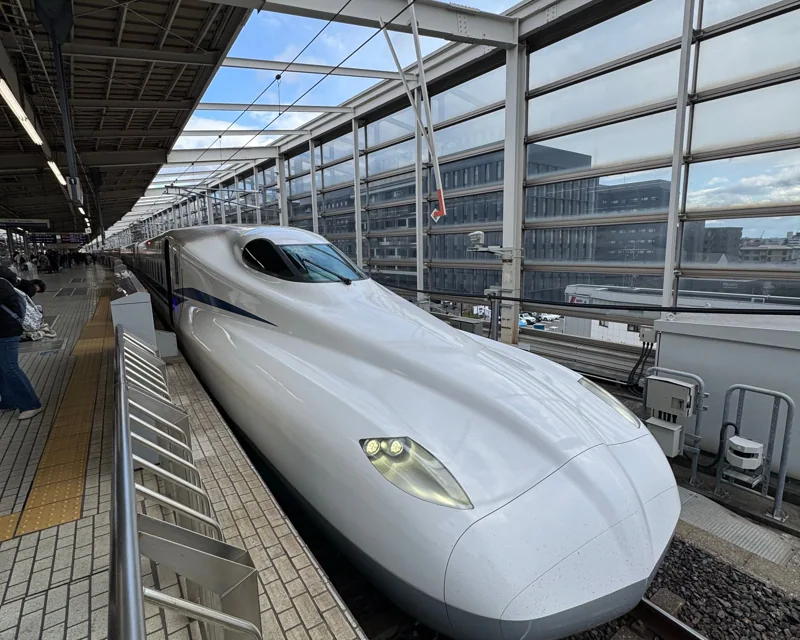
DAY-BY-DAY ITINERARY Continue to Nishiki Market, a narrow 400-metre-long street, where you can choose your own lunch with recommendations from your guide. The day continues along the Philosopher's Path, named after the influential Japanese philosopher Kitaro Nishida, who walked here for his daily meditation. Then stroll through Gion, Kyoto's iconic historic district. At dusk, you may catch sight of real geiko and maiko, iconic figures of Japanese culture. At 18h, enjoy a performance at the Gion theatre, with classical kyogen comedy and kyomai dance. A unique experience combining historic charm with an enchanting atmosphere. Japanese dinner in Gion, then return to the hotel for the night. Saturday 20 November – Kyoto - Kanazawa After breakfast, walk to the station and depart for Kanazawa by Shinkansen, Japan's high-speed rail system. Space on board is limited, so we recommend travelling light with just a small bag for your night in Kanazawa. Arrival is expected around 12h00, followed by lunch at a local restaurant. Visit prestigious Kenroku-en, Kanazawa's city garden and undoubtedly one of the country's most beautiful. Then attend a tea ceremony, in which every stage is carefully orchestrated and every movement precise to create perfect matcha. Next, discover kinpaku: gold rolled by machine and then beaten into extremely thin square sheets. Today, Kanazawa offers all kinds of crafts made using this technique. Gold leaf is one of the symbols of Ishikawa's refined culture. Check in at the hotel, then head to the Japanese restaurant Otomoro. Enjoy the traditional arts of Kanazawa's geishas while savouring delicious food and drinks. Return to the hotel for the night. Sunday 21 November – Kanazawa - Shirawakago - Takayama Head to Kanazawa Castle, a fortified complex beside the Sea of Japan. The visit focuses on the park, with fortifications, turrets and gates partly rebuilt after a fire. Continue towards Shirawakago, a journey of around 2h. Lunch en route. Travel through the beautiful upper Sho Gawa region and visit the former home of the Kanda family, who settled here after leaving the Wada family to begin producing sake. Another stop takes you to Gokayama, a collection of rural Japanese villages whose preserved historic architecture is UNESCO listed. Arrive and settle into your ryokan. The property is carpeted throughout with tatami mats; after check-in, wear a yukata and socks as you make your way to enjoy the onsen. Depart at 19h00 for dinner at a local restaurant featuring Hida beef, one of Japan's finest meats alongside Kobe beef. Overnight stay. Monday 22 November – Takayama Japanese breakfast at the ryokan, then set off on foot to explore the town. Surrounded by mountains, Takayama has limited farmland but abundant timber. This little Tokyo of the Alps is full of charm, an ideal place to discover rural Japan and its thousand-year history. Begin the morning by walking through the morning market and Kamisannomachi district. Entering this neighbourhood takes you as close as possible to the peaceful Edo period, when it knew no conflict. Taste sake, the country's emblematic drink, and visit the brewery. Local lunch (hoba miso).
Detailed route · page 5
DAY-BY-DAY ITINERARY Next, visit Takayama Jinya, an essential stop: this was the former regional office of the Edo Bakufu, the military government under the Shogun, the commander-in-chief. Its buildings and annexes regulated the provinces' economic and judicial affairs. Enjoy some free time to wander the streets and browse for antiques. Dinner at a local restaurant, then return to the ryokan for the night. Tuesday 23 November – Takayama - Kawaguchiko After breakfast, depart for Kawaguchiko, around 5h away by road, with photo stops along the way. After lunch, stop at the Kubota Itchikuu Museum. It is as famous for its splendid kimono collection as for its garden, where green bamboo contrasts with the fiery red leaves of Japanese maples. Arrive at the hotel around 16h30 to enjoy the onsen and outstanding views of Mount Fuji. Buffet dinner and overnight at the hotel. Wednesday 24 November – Kawaguchiko - Tokyo After breakfast, visit Fuji Asama Shinto Shrine, whose long history dates back to Mount Fuji's Jogan eruption in 864. Stop at Oshino Hakkai village. Its thatched houses, tall grasses and watermill set it apart from other villages surrounding Japan's highest mountain. Listed as a World Heritage Site since 2013 for its distinctive architecture, the village is now devoted to local crafts. Lunch at a local restaurant. Continue to Gotemba district for some free time to shop. Head to the funicular on Mount Takao, another sacred mountain in Japan and the world's most visited mountain. Around fifty kilometres from the capital, it offers beautiful clear views across the surrounding area. Drive to Tokyo, arriving around 19h30. Dinner and overnight at the hotel. Thursday 25 November – Tokyo Breakfast at the hotel, then set off for your first tour of the capital. Tokyo is a fascinating blend of contrasting neighbourhoods: skyscrapers, neon signs, traditional temples and shrines. First, photo stops at the Imperial Palace and Hachiko statue. Then visit Meiji Jingu Shrine, a Shinto shrine built in 1920 within a planted forest. Stroll through Harajuku and Omote Sando, nicknamed Tokyo's Champs-Elysées. Just 2 minutes' walk from the shrine, experience the contrast between the forest's calm and the city's energy. Lunch at the famous Japanese restaurant Gonpachi, one of the filming locations for Kill Bill. Then meet Maman, the monumental, long-legged spider sculpture by Louise Bourgeois. Continue to the Mori Building Digital Art Museum for an immersive digital art experience, exploring dimly lit rooms with no set route. Depart for the restaurant at 19h00, then return to the hotel for the night. Friday 26 November – Tokyo - Kamakura - Tokyo Morning departure by coach to Kamakura, a place of peace and a distinctive atmosphere shaped by 65 Buddhist temples and some twenty Shinto shrines. Visit Kotokuin Temple, better known for its Daibutsu, a giant Buddha statue 11,4m high and weighing 122 tonnes.
Detailed itinerary · page 6
DAY-BY-DAY ITINERARY This great Buddha, meditating in the lotus position beneath the open sky, is Kamakura's only National Treasure. Continue to Kencho-ji Temple, one of the city's five great Zen temples, built in the XIIIth century. Lunch during the excursion. Visit Hase Dera Temple, home to Kannon, goddess of mercy. According to legend, this wooden sculpture, carved in Hase village then cast into the nurturing sea, reappeared on Kamakura's beach. Continue to Tsurugaoka Hachiman-gu, the city's main Shinto shrine, before strolling along Komachi Street, filled with local crafts. Return to Japan's capital late in the day, have dinner at a restaurant near the hotel and stay overnight. Saturday 27 November – Tokyo - Munich Breakfast at the hotel, then depart with your luggage, which will remain in the coach, to explore another part of the city. Begin with Hamarikyu Gardens, covering 25 hectares. The skyscrapers of Shiodome's business district tower above the paths, contrasting with the park's traditional appearance. Created in the XVIIth century by the Tokugawa shogun family, the gardens are designated a historic site of exceptional beauty by Japan's Ministry of Culture. Then stroll through Tsukiji, the Tokyo district home to the famous major fish market. The market can be broadly divided into three sections: tuna auctions, the covered market devoted to fish of every kind, and the outer section selling condiments. Lunch at your own expense, with help from your local guide. Continue to Akihabara, an iconic Tokyo district best known as a paradise for otaku culture. Originally specialising in electronics, it has become a major centre for manga, video games, figurines and more. It is lively and brightly lit, with giant screens and shops spanning several floors. Nearby, Sensoji Temple immerses you in the distinctive atmosphere of traditional, everyday Tokyo. Enjoy some free time on Nakamise shopping street, whose colourful stalls create a vibrant scene. Transfer to the airport around 18h30 for your scheduled 22h55 flight to Munich. Sunday 28 November – Munich - Barcelona - Perpignan Arrive at Munich Airport at 6h40, with a connection of just 2h15. Departure is scheduled at 8h55, arriving at Barcelona Airport at 11h05. Collect your luggage, then transfer by coach to Perpignan.